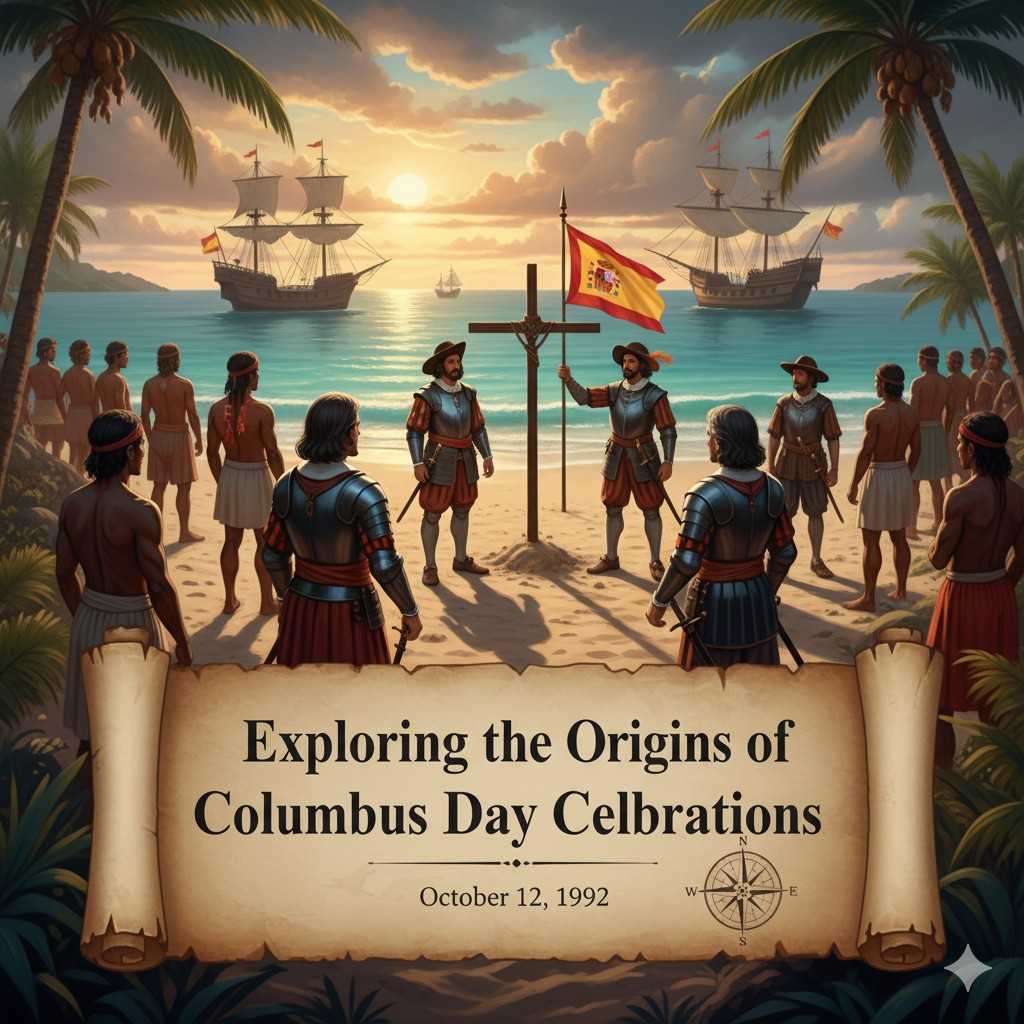
Columbus Day stands as one of America’s most discussed and evolving holidays. Celebrated on the second Monday of October, it commemorates Christopher Columbus’s arrival in the Americas on October 12, 1492. For over a century, Americans have marked the day with parades, school programs, and patriotic displays. Yet, in recent decades, the meaning of the holiday has changed — sparking national dialogue about history, identity, and inclusion.
This article explores the origins of Columbus Day celebrations, tracing how it began, what it symbolizes, and how Americans continue to shape its observance today. From its roots in Italian-American pride to its modern transformation, Columbus Day tells a complex story about America itself.
The Historical Event: Columbus’s Voyage of 1492
In 1492, Italian explorer Christopher Columbus, sailing under the Spanish crown, set out to find a new route to Asia. Instead, he landed in what is now known as the Bahamas, opening the door to European exploration and colonization of the Americas.
While his voyage marked a turning point in world history, it also led to centuries of change — both positive and tragic. The encounter between Europeans and Indigenous peoples reshaped societies, economies, and cultures forever.
Columbus’s name became synonymous with exploration, ambition, and discovery — but also with the complex legacies of colonization and cultural displacement that followed.
The Early Roots of Columbus Day in America
The idea of celebrating Columbus began long before it became a national holiday.
- 1792: The first recorded celebration took place in New York City, marking the 300th anniversary of Columbus’s voyage.
- Italian and Catholic communities in the U.S. saw Columbus as a heroic figure who represented exploration, faith, and perseverance.
As waves of Italian immigrants arrived in the late 19th century, facing discrimination and prejudice, Columbus became a symbol of pride and identity. He was one of the few widely recognized Italian figures in American history — a connection that helped unify immigrant communities struggling for acceptance.
The Rise of Columbus Day as a National Holiday
The Knights of Columbus and Advocacy
In the early 1900s, the Knights of Columbus, a Catholic fraternal organization, began pushing for national recognition of Columbus Day. They viewed Columbus as a Catholic hero whose courage reflected the spirit of America’s founding.
Their campaign succeeded when President Benjamin Harrison issued a proclamation in 1892, marking the 400th anniversary of the voyage with national celebrations.
Federal Recognition
In 1937, under President Franklin D. Roosevelt, Columbus Day officially became a federal holiday. It was established largely due to lobbying by Italian-American groups and supported by Congress. Initially observed on October 12, it was later moved to the second Monday of October in 1971, as part of the Uniform Monday Holiday Act to create long weekends.
How Columbus Day Was Traditionally Celebrated
Columbus Day became known for grand parades, patriotic speeches, and community pride — especially in cities with large Italian-American populations such as New York, Boston, Chicago, and San Francisco.
Typical traditions included:
- Parades and marching bands celebrating Italian culture.
- School lessons about Columbus’s voyages.
- Flags, floats, and cultural displays celebrating exploration and discovery.
- Political and community events recognizing Italian-American achievements.
These celebrations were not only about history but also about belonging — a moment for immigrant families to express their American identity proudly.
The Shift in Perspective: Re-examining Columbus’s Legacy
In recent decades, Columbus Day has become a subject of deep reflection and debate. Many historians and Indigenous groups have raised awareness of the devastating impact of European colonization on Native American peoples.
Critics argue that celebrating Columbus overlooks the violence, slavery, and diseases that accompanied colonization. As a result, many Americans have begun to reconsider what the holiday represents.
The Rise of Indigenous Peoples’ Day
In response, many U.S. states and cities have replaced or rebranded Columbus Day with Indigenous Peoples’ Day — a holiday that honors the culture, resilience, and history of Native Americans.
- South Dakota became the first state to officially celebrate Indigenous Peoples’ Day in 1990.
- Since then, over 30 states and hundreds of cities — including Los Angeles, Seattle, and Washington, D.C. — have adopted similar observances.
This shift represents a growing effort to acknowledge the full history of the Americas, both the achievements of exploration and the voices of those who endured its consequences.
Modern-Day Observance of Columbus Day in the USA
Today, Columbus Day is observed differently across the country:
- Federal and some state offices close for the day.
- Banks and schools may or may not observe it, depending on local rules.
- Italian-American organizations continue to hold parades and festivals, celebrating their cultural heritage.
- Others choose to honor Indigenous peoples, emphasizing education, reflection, and reconciliation.
For many, Columbus Day now serves as an opportunity to discuss American history honestly — balancing recognition of exploration with acknowledgment of its consequences.
Educational Importance and Reflection
Schools use Columbus Day to teach about the Age of Exploration, geography, and cultural encounters. However, modern education encourages critical discussion, helping students understand multiple perspectives.
Teachers often use the day to:
- Explore primary sources from both European and Indigenous viewpoints.
- Discuss how narratives evolve over time.
- Teach about respect for diverse cultures and historical empathy.
This approach transforms Columbus Day from a simple celebration into a lesson about history, humanity, and truth.
Columbus Day Around the World
While primarily a U.S. holiday, Columbus Day (or similar observances) exist globally:
- In Spain, it’s called Fiesta Nacional de España or Día de la Hispanidad, celebrating Spanish heritage.
- In Italy, it honors Columbus as a national hero.
- In many Latin American countries, it’s observed as Día de la Raza or Day of the Race, emphasizing the blending of cultures that followed the voyages.
Each version reflects a different perspective — whether pride, unity, or reflection — highlighting how Columbus’s journey remains a global historical marker.
The Cultural Impact of Columbus Day
Beyond parades and politics, Columbus Day has influenced art, literature, and identity.
- Statues and monuments dedicated to Columbus can be found in many American cities.
- Artists and authors have used his image to symbolize discovery, ambition, or conflict.
- Italian-American films and cultural works often feature Columbus Day themes as moments of family pride and community connection.
However, in the 21st century, these symbols are being reevaluated, with some statues removed or relocated due to public demand for more inclusive representation of history.
Columbus Day in the 21st Century: A Balanced Perspective
Today’s view of Columbus Day reflects the diversity of modern America. Some celebrate it as a cultural heritage day; others see it as a reminder to reexamine history’s complexities.
The growing coexistence of Columbus Day and Indigenous Peoples’ Day shows that Americans are learning to embrace multiple truths — recognizing discovery and resilience side by side.
Ultimately, the story of Columbus Day is about how nations remember their past — and how they evolve toward greater understanding.
FAQ Section
When is Columbus Day celebrated in the USA?
Columbus Day is celebrated on the second Monday of October each year. In 2025, it falls on October 13.
Why do we celebrate Columbus Day?
It commemorates Christopher Columbus’s arrival in the Americas in 1492, symbolizing exploration and discovery. It also celebrates Italian-American heritage.
Who made Columbus Day a federal holiday?
President Franklin D. Roosevelt made it a federal holiday in 1937, influenced by advocacy from Italian-American groups and the Knights of Columbus.
What’s the difference between Columbus Day and Indigenous Peoples’ Day?
Columbus Day celebrates the explorer’s arrival, while Indigenous Peoples’ Day honors Native American history and culture, recognizing their resilience and contributions.
Do all states in the USA celebrate Columbus Day?
No. Some states like South Dakota, Maine, and New Mexico have replaced it with Indigenous Peoples’ Day or other observances.
Is Columbus Day still a federal holiday?
Yes, it remains a federal holiday, meaning U.S. government offices close, but individual states and businesses may choose whether to observe it.
What are common Columbus Day traditions?
Parades, cultural festivals, school programs, and historical reflections are common. Italian-American communities often host special events celebrating their heritage.
How do schools teach about Columbus Day today?
Modern education presents a balanced perspective, teaching both Columbus’s achievements and the impact of colonization on Indigenous peoples.
What was the first city to celebrate Columbus Day?
New York City held the first recorded Columbus Day celebration in 1792, marking the 300th anniversary of the voyage.
Why is Columbus Day controversial?
Because it highlights Columbus’s voyage but overlooks the harmful effects of colonization on Indigenous communities, leading many to call for a more inclusive narrative.
Conclusion: Honoring the Past, Embracing the Future
The origins of Columbus Day reflect more than just a date in history — they reveal how America has grown, questioned, and redefined its identity over time. From its beginnings as a tribute to Italian-American pride to its modern transformation into a day of reflection, Columbus Day continues to spark meaningful dialogue about who we are and how we honor the past.
Whether celebrated as Columbus Day or Indigenous Peoples’ Day, the holiday invites all Americans to remember the journey — not only of one explorer but of an entire nation striving to balance heritage, truth, and unity.